
Regularly assessing your vision at home empowers you to monitor changes and understand potential issues, offering a proactive approach to maintaining optimal eye health and well-being.
Performing a manual eyesight check, utilizing resources like readily available eye charts, can provide valuable insights into your visual acuity and overall eye function.
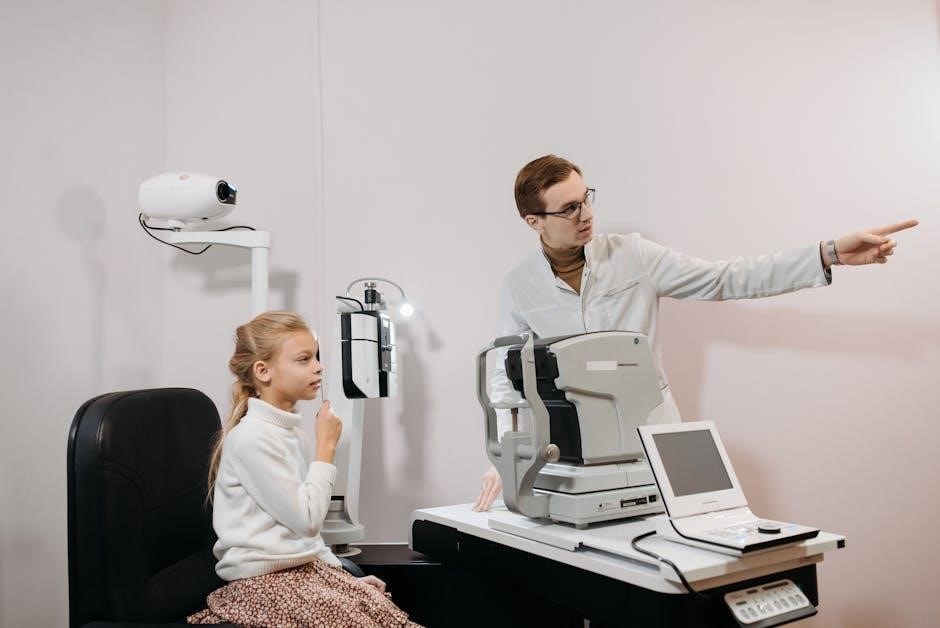
Why Perform a Manual Eyesight Check?
Conducting a home eyesight check serves as a crucial first step in identifying potential vision problems before they significantly impact daily life. It allows for early detection of changes, prompting timely professional evaluation and intervention.
These manual checks aren’t replacements for comprehensive eye exams, but they offer a convenient way to monitor your vision between appointments. Recognizing subtle shifts in visual clarity, like difficulty reading distant signs or blurry text, can indicate the need for corrective lenses or further investigation.
Furthermore, self-assessment empowers individuals to be more informed participants in their eye care, fostering a proactive approach to maintaining healthy vision. It’s a simple, accessible method to stay vigilant about your ocular well-being, especially when immediate professional access isn’t feasible.
Limitations of Home Vision Tests
While convenient, home eyesight tests have inherent limitations and shouldn’t be considered a substitute for a professional eye examination. These tests primarily assess visual acuity – sharpness of vision – and may not detect underlying eye diseases or conditions affecting overall eye health.
Factors like improper lighting, incorrect distance, or subjective interpretation can influence results, leading to inaccurate self-diagnosis. Home tests cannot evaluate crucial aspects like peripheral vision, eye muscle coordination, or internal eye pressure, all vital components of a comprehensive assessment.
Therefore, relying solely on self-checks can delay appropriate treatment for serious conditions. If you experience any concerning symptoms or notice significant changes in your vision, seeking professional care is paramount, regardless of home test outcomes.

Preparing for Your Eyesight Check
To ensure accurate results, gather necessary materials – an eye chart, pen, and measuring tool – and select a well-lit, spacious room for testing.
Required Materials
Successfully conducting a home vision test requires a few essential items to guarantee accuracy and reliability. First and foremost, you’ll need a standard eye chart; these are easily printable online, mirroring those used in doctor’s offices. Ensure it’s printed on standard-sized paper for consistent scaling.
A pen or pencil is crucial for meticulously recording your results, noting which letters you can and cannot clearly identify at various distances. A measuring tool – a yardstick, tape measure, or ruler – is vital for establishing and maintaining the correct testing distance, typically ten feet or more.
Finally, while not always mandatory, a flashlight can prove beneficial if the room’s ambient lighting is insufficient, illuminating the chart for improved visibility. Having these materials readily available will streamline the process and contribute to a more effective self-assessment.
Optimal Testing Environment
Creating the right environment is paramount for an accurate self-administered eyesight check. Begin by selecting a well-lit room, ensuring sufficient illumination to clearly view the eye chart without strain. Ideally, the room should be at least ten feet long to accommodate the necessary testing distance.
Minimize distractions; a quiet space free from interruptions will allow for focused concentration. Avoid glare from windows or overhead lights, as this can interfere with visibility. A neutral-colored wall serves as an ideal backdrop for the eye chart, enhancing contrast and readability.
Ensure the chart is securely affixed to the wall, preventing movement during the test. Comfortable room temperature also contributes to a relaxed testing experience, promoting more reliable results. Prioritizing these environmental factors will maximize the effectiveness of your home vision assessment.

Using a Standard Eye Chart
Standard eye charts, mirroring those used by professionals, are readily available online for convenient home vision screening and assessment of visual acuity.
Printing and Positioning the Eye Chart
To begin, print the standard eye chart on typical, letter-sized printer paper, ensuring clarity and legibility of the letters for accurate results. Once printed, securely affix the chart to a well-lit wall, utilizing tape or tacks to ensure it remains flat and stable during the testing process.
Proper positioning is crucial; the chart should be at eye level when you are standing at the designated testing distance. Ensure the chart is free from obstructions and that the lighting doesn’t create glare or shadows that could interfere with your ability to clearly discern the letters. A clean, uncluttered background will also enhance visibility and contribute to a more reliable self-assessment.
Remember, consistent placement is key for tracking changes over time, so note the exact location for future tests.
Distance and Lighting Considerations
Maintaining the correct distance is paramount for an accurate self-check; a room at least ten feet long is recommended to allow for proper positioning. Stand precisely twenty feet away from the eye chart – using a yardstick, tape measure, or ruler to verify this distance is essential. Consistent distance ensures comparable results over time.
Adequate lighting is equally critical. A well-lit room minimizes strain and maximizes visibility. Avoid direct glare or bright light sources shining directly onto the chart or into your eyes. If the chart appears dim, supplement with a flashlight to illuminate the letters, enhancing clarity.
Optimal conditions involve diffused, even lighting, mimicking a typical doctor’s office environment for reliable assessment.
Reading the Eye Chart: Understanding 20/20 Vision
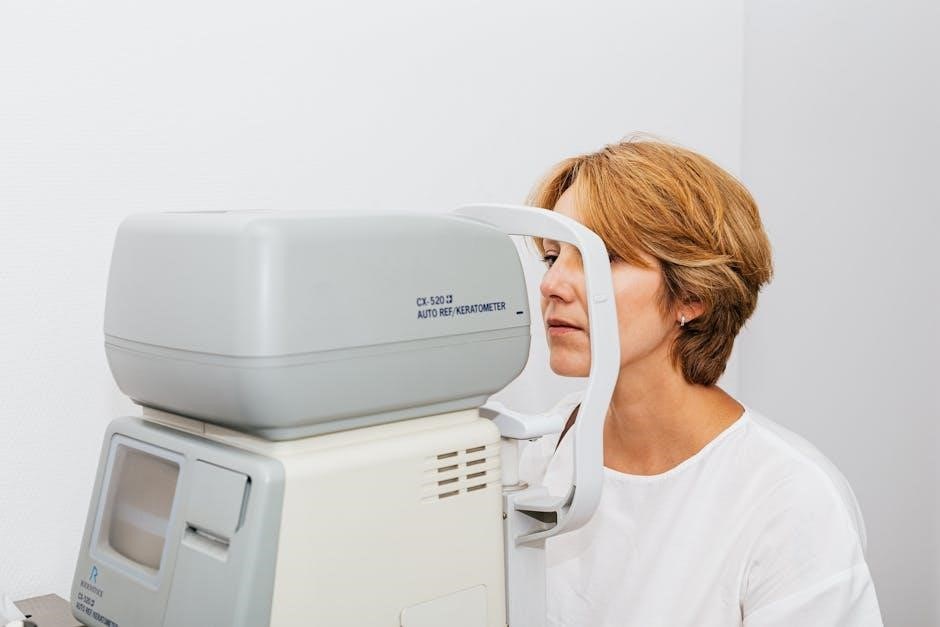
Begin by covering one eye and reading the smallest line of letters you can clearly discern. Repeat this process with the other eye. Each line is labeled with a distance; 20/20 vision signifies that you can read a line at 20 feet that a person with normal vision should be able to read at that distance.
For example, 20/30 vision means you need to be 20 feet away to read letters only someone with 20/30 vision could see at that distance. Lower numbers indicate better vision. Systematically work through the chart, noting the smallest line you can read with each eye.
Record these results carefully, as they provide a baseline for tracking changes in your vision over time.
Identifying Nearsightedness (Myopia)
Nearsightedness, or myopia, occurs when you can see objects clearly up close, but distant objects appear blurry. During your eye chart test, if you struggle to read larger letters at a distance, but can easily see them when the chart is brought closer, this suggests potential nearsightedness.
Essentially, your eye focuses light in front of the retina instead of directly on it. The degree of difficulty reading distant letters correlates with the severity of the myopia. Consistent difficulty with distance vision, even with corrective lenses, warrants a professional evaluation.
Remember, self-tests are not a substitute for a comprehensive eye exam, but can indicate a need for professional care.
Identifying Farsightedness (Hyperopia)
Farsightedness, or hyperopia, presents as difficulty seeing close-up objects clearly, while distant vision may remain relatively sharp. When using an eye chart, individuals with hyperopia might struggle to read even the larger letters, regardless of the chart’s distance.
This occurs because light focuses behind the retina, rather than directly on it. Unlike myopia, bringing the chart closer may not significantly improve clarity. You might experience eye strain, headaches, or fatigue when focusing on nearby objects.
It’s important to note that mild hyperopia can sometimes be compensated for by the eye’s natural focusing ability, especially in younger individuals. However, persistent blurriness at near distances necessitates a professional eye examination.

The Amsler Grid for Macular Degeneration
Utilizing the Amsler grid helps detect visual disturbances, particularly those related to macular degeneration, by identifying distortions or blind spots in your central vision.
Understanding the Amsler Grid
The Amsler grid is a tool designed to monitor central vision, crucial for tasks like reading and driving. It consists of a grid of horizontal and vertical lines with a central dot. This simple yet effective chart helps identify distortions, wavy lines, or blank spots that can indicate macular degeneration or other retinal problems.
It’s important to understand that the grid doesn’t test overall visual sharpness, like a standard eye chart does. Instead, it focuses on how your brain perceives the straight lines. Any deviation from perfectly straight lines, or the appearance of dark areas, warrants further investigation. Regular use of the Amsler grid allows for early detection of changes, potentially preserving vision with timely treatment; Focus directly on the central dot during each test.
How to Use the Amsler Grid
To effectively use the Amsler grid, begin by holding it approximately 12-15 inches away from your face, in a well-lit environment. Cover one eye and, with your uncovered eye focused solely on the central dot, observe the entire grid. Maintain this focus; avoid scanning or moving your eyes around.
Repeat this process with the other eye covered. Note any areas where lines appear wavy, blurred, distorted, or missing. Pay close attention to any dark or blank spots within the grid. If you wear glasses or contacts for distance vision, wear them during the test. Consistency is key – use the same lighting and distance each time for accurate comparison of results over time. Regular self-monitoring can help detect subtle changes.
Interpreting Amsler Grid Results: Distortion and Blind Spots
Any distortion observed on the Amsler grid – wavy, bent, or blurred lines – is a potential warning sign, particularly if it’s new or different from previous tests. The presence of dark, empty, or missing areas, often referred to as blind spots, is also concerning. These changes can indicate issues with the macula, the central part of the retina responsible for sharp, detailed vision.
Even subtle distortions should not be ignored. While not always indicative of a serious problem, any alteration from a previously normal grid warrants prompt evaluation by an eye care professional. Don’t attempt to self-diagnose; professional assessment is crucial for accurate diagnosis and timely intervention. Consistent monitoring and reporting changes are vital.

Additional Self-Assessment Techniques
Beyond standard charts, explore peripheral vision testing and color perception checks to gain a more comprehensive understanding of your overall visual capabilities and health.
Testing Peripheral Vision
Assessing your peripheral vision is a crucial component of a comprehensive self-assessment, as it reveals your ability to detect objects outside of your direct line of sight; This test helps identify potential blind spots or areas of reduced vision that might indicate underlying conditions.
To perform this check, sit comfortably and focus your gaze on a fixed point straight ahead. Slowly bring your hands into your peripheral vision, one on each side. Note the point at which you first notice your hand – or an object – appearing in your side vision.
Repeat this process several times, ensuring consistency. Any significant differences or noticeable gaps in your peripheral awareness warrant further investigation by a qualified eye care professional. Consistent monitoring can help detect subtle changes over time.
Checking for Color Blindness
Evaluating your ability to distinguish colors is an important part of a self-assessment, as color blindness can affect daily life in unexpected ways. While a definitive diagnosis requires professional testing, several online tools and charts can provide a preliminary indication;
These tests typically present a series of images containing numbers or shapes embedded within patterns of colored dots. Individuals with normal color vision will easily identify the hidden figures, while those with color deficiencies may struggle.
Numerous free color blindness tests are readily available online; simply search for “Ishihara test” to find examples. If you consistently have difficulty identifying the hidden images, it’s advisable to schedule a comprehensive eye exam for a proper diagnosis and guidance.
Assessing Depth Perception
Depth perception, the ability to judge distances accurately, is crucial for many everyday tasks like driving, navigating stairs, and catching objects. A simple home test can offer a basic assessment of this vital visual skill.
Hold a pen or pencil at arm’s length and extend your arm towards another person. Ask them to hold their thumb up. Close one eye, then the other, alternating several times. Note any significant difference in the apparent position of the thumb relative to the background.
If the thumb appears to “jump” or shift considerably when switching eyes, it may indicate a problem with depth perception. Consistent difficulties with spatial awareness or clumsiness also warrant a professional evaluation. Accurate depth perception relies on both eyes working together effectively.

Recording Your Results
Meticulously documenting your self-checks, including the date, testing distance, and observed results, establishes a valuable baseline for tracking changes in your vision over time.
Importance of Accurate Record Keeping
Consistent and detailed record-keeping is paramount when performing self-assessments of your eyesight. These records serve as a crucial historical reference, allowing you and your eye care professional to identify subtle changes or trends in your vision that might otherwise go unnoticed.
By noting the date of each test, the distance at which the eye chart was positioned, and your specific results – which letters you could or couldn’t read – you create a personalized visual health timeline. This information becomes invaluable during professional eye exams, providing your doctor with a clearer picture of your vision’s progression or any potential concerns.
Accurate records also empower you to recognize when professional attention is needed, as you’ll be able to quickly identify deviations from your established baseline. Don’t rely on memory; write it down!
What to Record: Date, Distance, and Results
When documenting your self-checks, meticulous detail is key. Begin each entry with the date of the test – month, day, and year – to establish a clear timeline. Next, precisely record the distance from which you viewed the eye chart, typically measured in feet. Consistency is vital; always test at the same distance for comparable results.
Most importantly, carefully document your results. For each eye, record the smallest line of letters you could accurately read. Note any letters you misidentified or couldn’t see at all. If using an Amsler grid, document any distortions, wavy lines, or blank spots observed.
Consider creating a simple table or spreadsheet to organize this information. This structured approach will make it easier to track changes and share the data with your eye care provider during your next appointment.
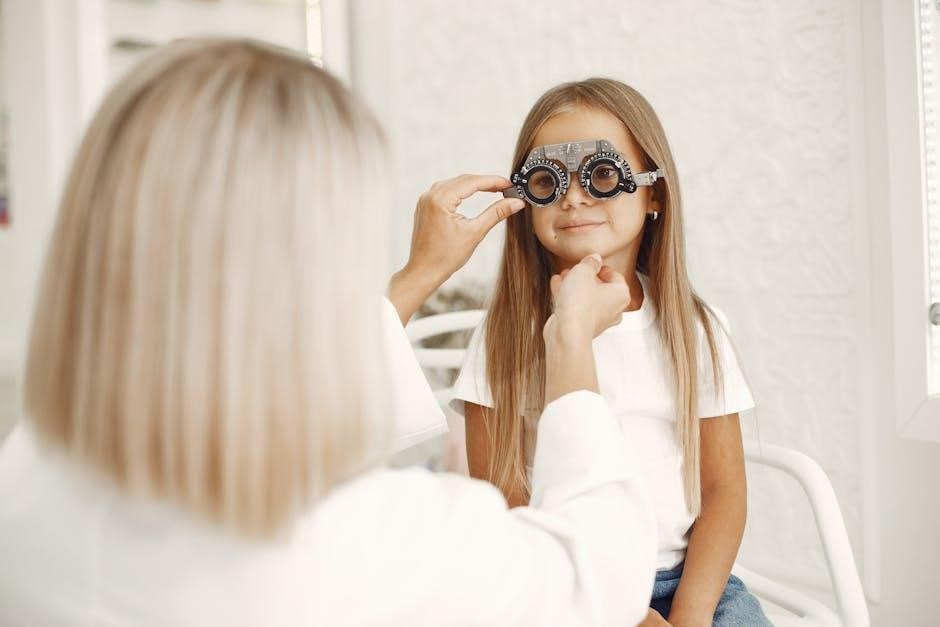
When to Seek Professional Eye Care
Promptly consult an eye doctor if you experience sudden vision loss, persistent floaters, flashes of light, or significant distortion, ensuring timely diagnosis and treatment.
Red Flags: Symptoms Requiring Immediate Attention
Certain visual disturbances necessitate urgent medical evaluation to prevent potential long-term damage. Sudden vision loss in one or both eyes is a critical warning sign, demanding immediate attention from a qualified ophthalmologist.
Similarly, a rapid increase in floaters – those small shapes that drift across your field of vision – especially accompanied by flashes of light, could indicate a retinal detachment, a serious condition requiring prompt treatment.
Severe eye pain, particularly if associated with redness, swelling, or changes in vision, should also be addressed immediately. Any trauma to the eye, even seemingly minor, warrants a professional assessment to rule out internal injuries.
Furthermore, experiencing halos around lights, double vision, or a sudden onset of blurry vision could signal underlying issues needing immediate diagnosis and intervention. Ignoring these symptoms could lead to irreversible vision loss.
Frequency of Professional Eye Exams
While self-checks offer valuable insights, they are not substitutes for comprehensive professional eye exams. Generally, adults should schedule an eye exam at least every one to two years, even without noticeable vision changes.
Individuals with existing eye conditions, such as diabetes, glaucoma, or macular degeneration, require more frequent monitoring – often every six to twelve months – as recommended by their eye care provider.
Children also need regular eye exams, starting in infancy, to ensure proper visual development and identify any potential issues early on. Early detection and intervention are crucial for optimal vision health throughout life.
Remember, a professional exam assesses not only visual acuity but also eye pressure, optic nerve health, and overall eye structure, providing a thorough evaluation beyond the scope of home testing. Prioritize these regular check-ups!