Horse Blanketing Guide: A Comprehensive Overview (Updated 02/16/2026)
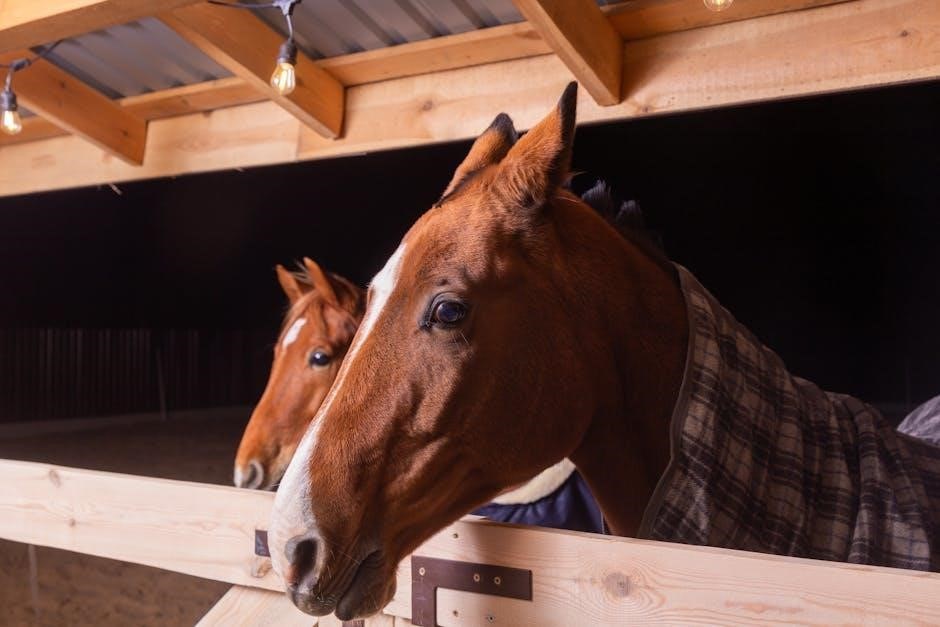
Today’s date is 02/16/2026 06:19:48 (). This guide ensures your horse’s comfort with the perfect blanket fit, preventing rubbing and slippage.
Understanding the Need for Horse Blankets
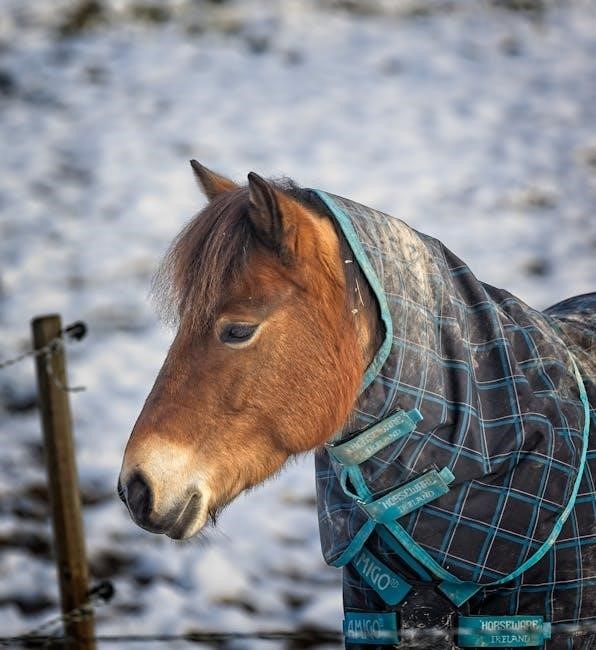
Protecting your equine companion with a blanket isn’t simply about warmth; it’s a multifaceted consideration based on climate, coat condition, workload, and individual horse needs. Horses naturally adapt to temperature changes through coat growth, but management practices like clipping, intense training, or age can compromise their natural insulation.
Blankets provide crucial protection against harsh weather – rain, wind, and snow – preventing chilling and subsequent illness. They’re especially vital for horses with limited access to shelter or those recovering from injury. Selecting the appropriate blanket weight and material ensures comfort and prevents overheating or excessive sweating. Understanding these factors is key to responsible horse ownership and maintaining your horse’s well-being throughout the seasons.
Types of Horse Blankets
Horse blankets come in diverse styles, each designed for specific purposes. Stable blankets offer warmth in the barn, typically featuring heavier fill. Turnout blankets are waterproof and durable, intended for outdoor use in various weather conditions. Fly sheets & mesh blankets provide protection from biting insects without the warmth of a traditional blanket.
Rain sheets & waterproof blankets focus on keeping your horse dry, often lighter in weight than turnout blankets. Brands like Weatherbeeta, Horseware Ireland, and Tough 1 offer a wide range of these types. Choosing the right blanket depends on your horse’s environment and activity level, ensuring optimal comfort and protection. Consider features like denier ratings and neck coverage when selecting a blanket.
Stable Blankets
Stable blankets are primarily used indoors, providing warmth without the need for waterproof features. They are ideal for clipping horses during colder months or for those who require extra warmth in the barn. Typically, stable blankets have a heavier fill weight, ranging from light to heavyweight, depending on the ambient temperature.
Brands like Kensington and Schneiders offer a variety of stable blanket options. These blankets often feature secure front closures and tail straps to keep them in place. Unlike turnout blankets, stable blankets don’t require the same level of durability as they aren’t exposed to the elements. Proper fit is crucial to prevent rubbing and ensure comfort for your horse while stabled.
Turnout Blankets
Turnout blankets are designed for outdoor use, offering protection from the elements – rain, wind, and snow. Durability is key, as these blankets endure more wear and tear than stable blankets. Brands like Weatherbeeta and Horseware Ireland are renowned for their robust turnout blanket construction.
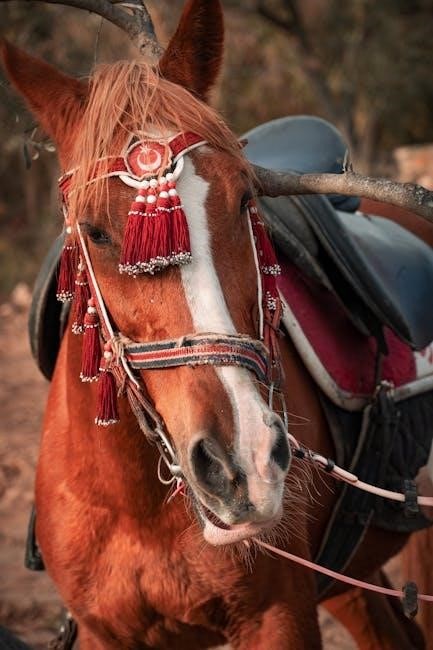
Waterproof and breathable materials are essential features, preventing moisture buildup while allowing airflow. Turnout blankets come in various fill weights, from lightweight for mild temperatures to heavyweight for harsh winters. A secure fit is paramount to prevent slippage and rubbing, especially during active grazing. Consider features like extended necks and belly wraps for added protection and comfort during turnout.
Fly Sheets & Mesh Blankets
Fly sheets and mesh blankets provide crucial protection from biting insects during warmer months. These blankets are typically made from highly breathable materials, allowing for excellent airflow to keep your horse cool and comfortable. They shield against irritating flies, mosquitoes, and even harmful UV rays.
Different mesh densities offer varying levels of insect protection. Some feature belly bands for added coverage and security. Look for designs that minimize rubbing and allow for a full range of motion. Fly sheets are essential for horses sensitive to insect bites or prone to sweet itch. Proper fit is vital to prevent gaps where insects can access the horse’s skin, ensuring a pest-free turnout.
Rain Sheets & Waterproof Blankets
Rain sheets and waterproof blankets are indispensable for keeping your horse dry and comfortable during wet weather. Constructed from waterproof and breathable materials, they prevent rain from soaking through while allowing moisture vapor to escape, minimizing chills. These blankets are ideal for mild to moderate rainfall and can be layered under heavier blankets for added warmth in colder, wet conditions.
Denier ratings indicate the fabric’s thickness and durability; higher denier offers greater waterproof protection. Features like taped seams and waterproof closures further enhance their effectiveness. Ensure a proper fit to prevent water from entering underneath. Regular inspection for tears or damage is crucial to maintain their waterproof capabilities, safeguarding your horse from the elements.
Measuring Your Horse for a Blanket
Accurate measurement is key to ensuring a comfortable and secure blanket fit, preventing rubbing and slippage. You’ll need a soft measuring tape and, ideally, a helper. Begin by standing your horse on level ground, as squarely as possible. The measurement process requires two key dimensions: length and chest girth.
Take your time and be precise. A properly fitted blanket allows for a few inches of movement without being too loose. Remember that some brands, like Weatherbeeta, may run slightly larger, so consider sizing down if you’re between sizes. Consistent measurements are vital for online blanket purchases, guaranteeing a snug and protective fit for your equine companion.
Taking the Length Measurement
To determine blanket length, measure from the center of the horse’s chest, along the body, to the tailhead. Ensure the tape measure follows the highest point of the withers. This is a crucial step for a comfortable fit, avoiding pressure points or gaps.
Keep the tape level and snug, but not tight, against the horse’s body. It’s helpful to have an assistant maintain the tape’s position while you read the measurement. Round up to the nearest inch if your measurement falls between sizes. Accurate length measurement is paramount for preventing rubbing and ensuring the blanket stays securely in place during movement and turnout.
Taking the Chest Measurement
The chest measurement is taken around the widest part of the horse’s chest, just behind the front legs. Wrap the measuring tape around the body, ensuring it’s snug but doesn’t constrict breathing. This measurement is vital, especially for blankets with front closures, as it dictates how well the blanket will fasten and stay in place.
Avoid pulling the tape too tight, as this will result in an inaccurate, smaller measurement. A comfortable fit allows for a few inches of leeway. Compare this chest measurement with the blanket’s chest size range to ensure a proper fit. This, combined with length, guarantees optimal comfort and prevents rubbing or slippage during wear.
Horse Blanket Sizing Charts
Accurate sizing is crucial for a comfortable and secure blanket fit. Charts typically range from 66″ to 84″, but variations exist. Brands like Weatherbeeta are often slightly oversized, suggesting sizing down if measurements fall between sizes. European/Metric sizing differs, requiring conversion for accurate comparison.
Pony and mini horse blankets have their own dedicated sizing charts, reflecting their smaller frames. Always consult the specific brand’s chart, as discrepancies can occur. Remember to measure your horse regularly, as weight fluctuations can impact the ideal blanket size. A well-fitted blanket prevents rubbing and ensures optimal protection from the elements.
Standard Blanket Sizing (68″ ー 84″)
The standard range, 68″ to 84″, covers most adult horses. Determining the correct size within this range relies on precise measurements – length from chest to tail base, and chest circumference. A 72″ blanket is a common starting point for many horses, but individual variation is significant.
Consider the horse’s build; a wider-bodied horse may need a larger size, even with a standard length. Many popular brands, including Weatherbeeta, Horseware Ireland, Tough 1, and Schneiders, utilize this sizing system. Always refer to each brand’s specific chart, as slight differences exist. Proper fit prevents rubbing and ensures full coverage.
Pony & Mini Horse Blanket Sizing
Pony and mini horse blankets differ significantly from standard sizing, typically ranging from 48″ to 64″. Accurate measurement is crucial, as these smaller equines require a precise fit to avoid discomfort and ensure the blanket stays securely in place. Unlike adult horses, pony sizing often focuses more on body length than chest circumference.
Manufacturers like Schneiders offer specialized pony blanket sizes. When measuring, remember to account for the pony’s build – a broader pony may need a wider blanket within the same length. Always consult the specific brand’s size chart, as variations exist. A properly fitted blanket will allow for comfortable movement and full protection.
European/Metric Blanket Sizing
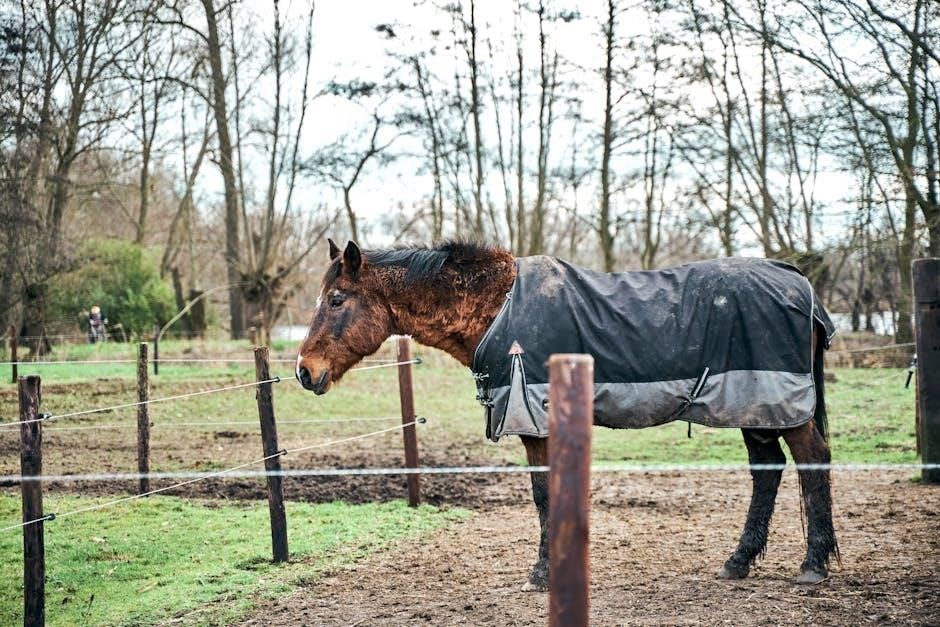
European blanket sizing utilizes centimeters instead of inches, requiring conversion for those accustomed to standard measurements. Horseware Ireland, a prominent blanket manufacturer, provides sizing guides in both systems. Typically, European sizes range from 195cm to 215cm, corresponding roughly to 77″ to 85″ in inches.
Accurate measurement is paramount when using metric sizing. Ensure the measuring tape is taut and follows the horse’s contours correctly. Remember that some brands, like Weatherbeeta, may have slight variations even within the European standard. Always cross-reference the specific brand’s chart for the most accurate fit. Proper fit prevents rubbing and ensures optimal blanket performance.
Blanket Materials & Fill Weights
Blanket materials significantly impact performance and comfort. Waterproof and breathable fabrics are crucial for turnout blankets, preventing moisture buildup while allowing airflow. Denier ratings indicate fabric strength; higher denier means greater durability. Common materials include ripstop nylon and polyester.
Fill weights, measured in grams (g), determine blanket warmth. Lightweight blankets (0-100g) are suitable for mild temperatures, while medium-weight (100-300g) offer versatility. Heavyweight blankets (300g+) provide substantial warmth for harsh winter conditions. Selecting the appropriate fill weight depends on climate, horse’s coat, and activity level. Consider layering blankets for adaptable warmth.
Waterproof & Breathable Materials
Effective waterproof materials are essential for turnout blankets, shielding horses from rain and snow. However, simply being waterproof isn’t enough; breathability prevents sweat buildup and subsequent chilling. Materials like ripstop nylon or polyester with a waterproof coating are common.
Breathability is achieved through coatings or membranes that allow water vapor to escape while blocking liquid water. Look for blankets with a waterproof rating (measured in millimeters) and a breathability rating (measured in grams per square meter per 24 hours). Higher ratings indicate better performance. Proper material selection ensures a comfortable, dry environment for your horse, even in inclement weather.
Denier Ratings Explained
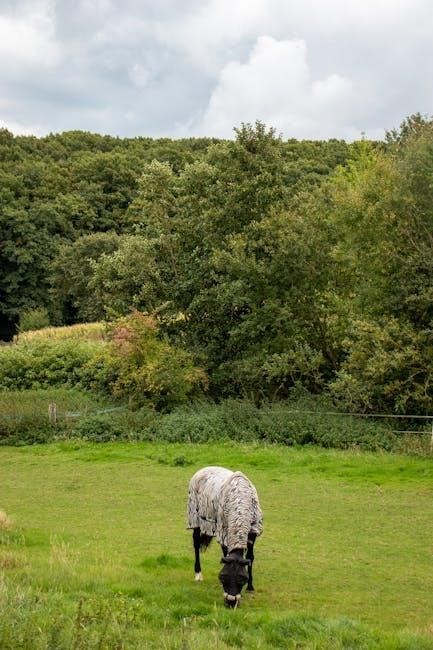
Denier (D) is a unit of measurement for the linear mass density of fibers, indicating the thickness and durability of the fabric used in horse blankets. A higher denier number signifies a thicker, more robust material, and therefore, greater resistance to tearing and abrasion.
Blankets typically range from 600D to 1680D. Lower denier fabrics (600D) are suitable for stable blankets or lighter-duty turnout blankets, while higher denier fabrics (1200D-1680D) are preferred for horses that are hard on blankets or for extended turnout in challenging environments. Choosing the appropriate denier rating ensures the blanket can withstand your horse’s activities and the elements.
Lightweight (0-100g) Blankets
Lightweight blankets, with fill weights ranging from 0 to 100 grams, are ideal for transitional weather or for horses that require minimal coverage. These blankets primarily offer a waterproof and windproof shell without significant warmth. They’re perfect for keeping horses dry during light rain or preventing chills after grooming or exercise.
Often referred to as “sheet blankets” or “cooler blankets,” they facilitate drying and prevent muscle stiffness. Horses with thick winter coats may only need a lightweight blanket during milder winter spells. Consider a lightweight option if your horse doesn’t typically get clipped and is stabled, needing only protection from the elements during turnout.
Medium Weight (100-300g) Blankets
Medium-weight blankets, featuring fill weights between 100 and 300 grams, provide a versatile level of warmth for a wider range of temperatures. These blankets are suitable for moderately cold weather, offering protection during the fall and spring, or milder winter conditions. They’re a good choice for horses that are clipped or have thinner coats, needing extra insulation.
These blankets strike a balance between warmth and breathability, preventing overheating while still providing adequate protection from the cold. Many horse owners utilize medium-weight blankets as their primary winter blanket, layering with a liner if temperatures drop significantly. Selecting the right weight depends on your horse’s individual needs and the local climate.
Heavyweight (300g+) Blankets
Heavyweight blankets, with fill weights exceeding 300 grams, are designed for the coldest winter temperatures. These blankets provide substantial insulation, ideal for unclipped horses in harsh climates or those with limited natural protection. They are essential for maintaining a comfortable body temperature when facing freezing conditions and significant wind chill.
Consider a heavyweight blanket when temperatures consistently fall below freezing. While offering maximum warmth, it’s crucial to monitor your horse for signs of overheating, especially during temperature fluctuations. Layering isn’t typically needed with these blankets, but ensuring proper fit is paramount to prevent rubbing and maintain effective insulation. Brands like Weatherbeeta and Horseware Ireland offer robust options.
Blanket Features & Considerations
Selecting the right blanket extends beyond weight and material; crucial features impact comfort and functionality. Neck coverage options range from no neck (ideal for milder weather) to standard and extended necks, providing varying degrees of warmth. Front closures, typically featuring buckles or Velcro, must be secure yet allow for movement.
Tail straps prevent blanket slippage, but should allow space for tail movement to avoid irritation. Blanket fit is paramount – a snug fit minimizes rubbing, while allowing room for comfortable shoulder movement. Regularly check for any signs of rubbing or sores. Consider brands like Schneiders for a tailored fit, and always prioritize your horse’s well-being when choosing features.
Neck Coverage Options (No Neck, Standard Neck, Extended Neck)
Blanket neck styles significantly impact warmth and freedom of movement. “No neck” blankets are best suited for mild climates or horses that don’t require extensive neck protection, offering maximum airflow. “Standard neck” blankets provide basic coverage, suitable for moderate temperatures and preventing light chill.
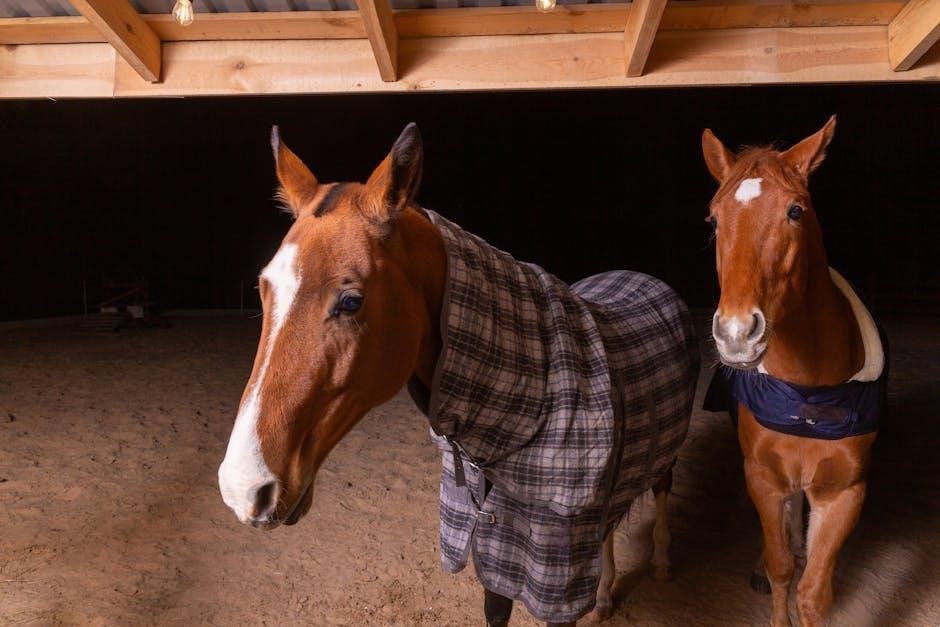
“Extended neck” blankets are ideal for horses prone to neck soreness or those needing extra warmth in colder conditions. They offer substantial coverage, extending further up the neck. When selecting, consider your horse’s conformation and climate. A properly fitted neck prevents rubbing and ensures comfortable movement, crucial for overall well-being.
Closure Systems (Front Closures, Tail Straps)
Secure blanket closures are vital for maintaining proper fit and preventing slippage. Common front closures include buckle closures, Velcro straps, and T-hooks, each offering varying levels of adjustability and security. Buckle closures are durable and allow for precise fitting, while Velcro offers convenience.
Tail straps prevent the blanket from lifting and shifting, ensuring consistent coverage. Elasticized tail straps offer flexibility and reduce the risk of chafing. It’s crucial to ensure tail straps aren’t overly tight, potentially causing discomfort or injury. Regularly check all closures for wear and tear, replacing damaged components promptly to maintain blanket security and your horse’s comfort.
Blanket Fit & Rubbing Prevention
Achieving a proper blanket fit is paramount to prevent rubbing and ensure your horse’s comfort. A well-fitted blanket allows for a full range of motion without shifting or creating pressure points. Pay close attention to the shoulder area, ensuring sufficient clearance to avoid chafing.
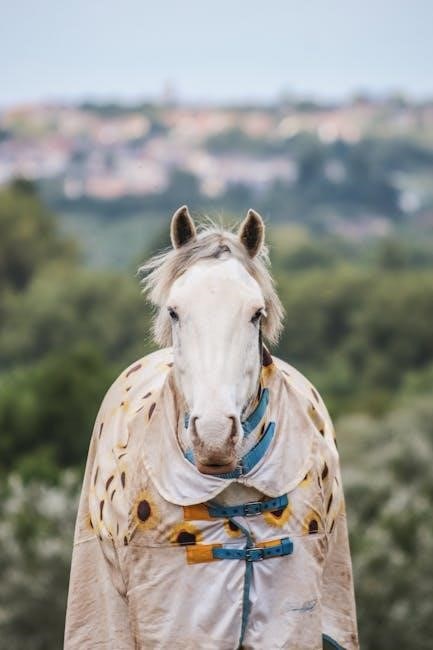
Regularly check for rub marks, particularly along the chest, shoulders, and withers. Utilize blanket liners or shoulder guards to provide extra cushioning and protection. Ensure tail straps aren’t too tight, and consider using a crupper to prevent the blanket from lifting. Proper sizing, combined with diligent monitoring, minimizes the risk of irritation and keeps your horse comfortable throughout the season.