Discover timeless customs and modern approaches to crafting a personalized ceremony, from vow renewals to securing expert wedding planners for your special day.
Weddings are steeped in history, representing a beautiful blend of cultural heritage and personal expression. For centuries, ceremonies have evolved, yet core traditions persist, symbolizing love, commitment, and the joining of families. From ancient rituals to modern celebrations, these customs offer a sense of continuity and meaning.
Understanding the origins of these practices—like the exchange of rings or the heartfelt vows—deepens their significance. Whether you envision a formal, symbolic ceremony or a more relaxed gathering, recognizing the enduring power of tradition can enrich your wedding experience. It’s about honoring the past while creating a future filled with love and cherished memories.
Today’s couples often personalize traditions, blending them with unique elements that reflect their individual stories. This guide explores the rich tapestry of wedding vows and traditions, offering inspiration for crafting a ceremony that is both meaningful and memorable.
Historical Roots of Wedding Traditions
Wedding customs aren’t arbitrary; they’re echoes of ancient beliefs and practices. Early traditions often centered around securing prosperity, fertility, and protection for the couple. These weren’t simply romantic gestures, but vital societal rituals. The exchange of goods, symbolic acts, and communal celebrations were commonplace.
Over time, these practices were influenced by religious beliefs and evolving social norms. Roman traditions, for example, emphasized legal contracts and public declarations. As societies shifted, so did the ceremonies, incorporating new symbols and meanings. Understanding this historical context provides a richer appreciation for modern wedding rituals.
From ancient Egypt’s use of rings to symbolize eternity, to the Victorian era’s emphasis on elaborate displays of wealth, each period left its mark on wedding traditions, shaping the celebrations we know today.
Ancient Origins: Symbolism and Rituals
Early weddings were deeply rooted in symbolism, often focused on ensuring fertility and warding off evil spirits. Ancient Egyptians utilized rings crafted from braided reeds, representing eternity with their circular form. These weren’t merely adornments, but potent symbols of unending love and commitment.
Rituals frequently involved the exchange of goods, signifying a transfer of property and a formal agreement between families. In many cultures, the bride was “given” to the groom, solidifying the alliance. These practices weren’t about ownership, but about establishing social bonds and securing the couple’s future.
Symbolic acts like jumping over a broom or sharing a meal represented a crossing of thresholds and a joining of lives, laying the foundation for the marital union.
Evolution Through the Centuries: Victorian & Modern Influences
Victorian weddings emphasized elaborate displays of wealth and social standing. White dresses, popularized by Queen Victoria, became a symbol of purity and innocence, shifting from various colors previously worn. Strict etiquette governed every aspect, from guest lists to gift-giving, reflecting societal norms.
The 20th and 21st centuries witnessed a dramatic shift towards personalization. Traditional vows began to be supplemented, and often replaced, with expressions of individual love and commitment. Couples increasingly prioritize reflecting their unique relationship in every detail.
Modern ceremonies embrace diversity, incorporating elements from various cultures and challenging conventional norms. The focus has moved towards genuine connection and celebrating the couple’s story, rather than adhering to rigid expectations.
The Wedding Party: Roles and Responsibilities
Traditionally, the wedding party provides support to the couple, both emotionally and logistically. This group, comprised of bridesmaids and groomsmen, assists with pre-wedding tasks like planning events and offering a helping hand during the celebration itself.
Bridesmaids offer companionship to the bride, assisting with dress shopping, attending showers, and providing a calming presence on the wedding day. Groomsmen support the groom, organizing the bachelor party and ensuring he arrives prepared.
Crucially, the Maid of Honor and Best Man hold key responsibilities, coordinating the wedding party, delivering speeches, and safeguarding the rings. Their roles are pivotal in ensuring a smooth and memorable experience for everyone involved.
Bridesmaids: Support and Tradition
Bridesmaids historically served a practical purpose, assisting the bride with her attire and protecting her from potential harm – a tradition evolving over centuries. Today, their role centers on emotional support and logistical assistance throughout the wedding journey.
They actively participate in pre-wedding events like bridal showers and bachelorette parties, fostering a celebratory atmosphere. On the wedding day, bridesmaids ensure the bride feels calm and confident, managing details and offering encouragement.
Beyond these duties, they contribute to the overall aesthetic, complementing the bridal party’s look and adding to the joyous ambiance. Their presence signifies friendship and love, enriching the wedding experience.
Groomsmen: Duty and Friendship
Historically, groomsmen were tasked with protecting the groom and his belongings, even assisting in eloping or defending against bride-price disputes – a far cry from modern expectations. Today, their primary role embodies steadfast friendship and unwavering support for the groom.
Groomsmen actively participate in pre-wedding festivities like bachelor parties, creating lasting memories and camaraderie. On the wedding day, they assist with logistical tasks, ensuring the groom remains relaxed and prepared.
Their presence symbolizes a bond of brotherhood and shared history, offering encouragement and a sense of stability. They contribute to the celebratory atmosphere, standing as pillars of support for the happy couple.
The Maid of Honor & Best Man: Key Roles
The Maid of Honor and Best Man are pivotal figures, acting as the couple’s right hands throughout the wedding journey. They aren’t merely attendants; they’re trusted confidantes and logistical coordinators.
The Maid of Honor supports the bride with dress shopping, planning the bachelorette party, and offering emotional support. She often assists with vendor communication and manages the bridal party on the wedding day.
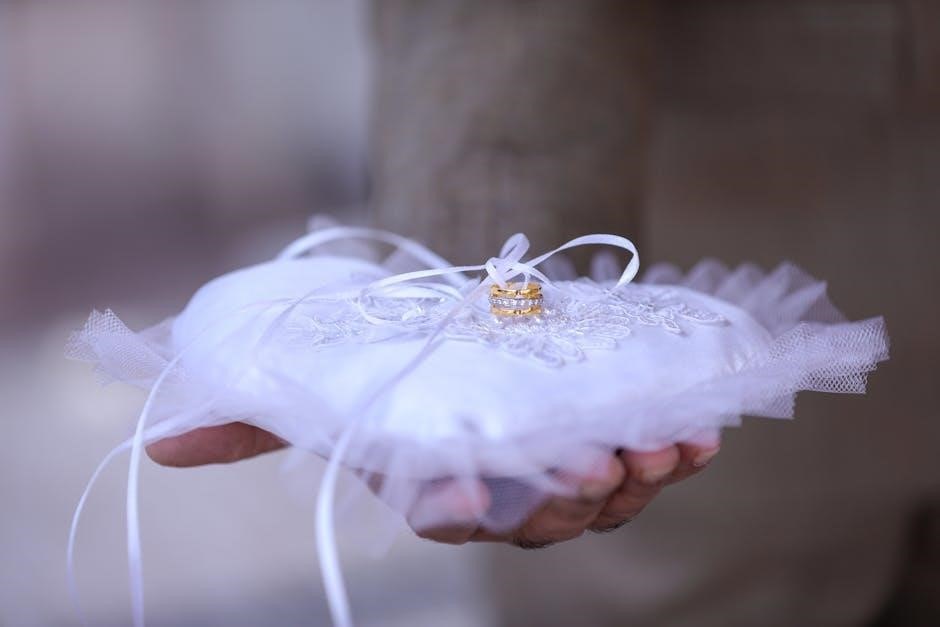
The Best Man assists the groom with suit fittings, organizes the bachelor party, and safeguards the wedding rings. Crucially, both deliver heartfelt toasts, celebrating the couple’s love story and offering well wishes for the future.
Wedding Rings: A Circle of Eternal Love
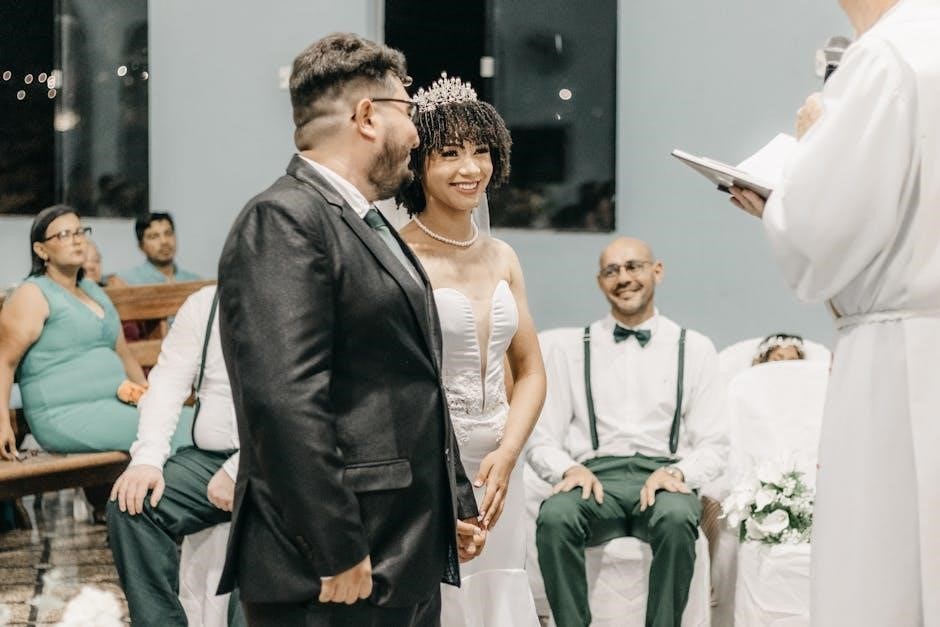
Wedding rings symbolize eternity, with their unbroken circle representing unending love and commitment. Historically, rings originated in ancient Egypt, crafted from braided reeds or hemp. Romans used iron, evolving to gold as a symbol of status and durability.
Today, gold remains popular, alongside platinum and palladium, offering distinct aesthetics and resilience. Couples personalize rings with engravings – dates, initials, or meaningful phrases – adding a unique touch.
Choosing the right ring involves considering metal type, style, and comfort. The ring’s design should reflect the couple’s personalities and complement their wedding bands, signifying a lasting bond.
History of Wedding Rings: From Ancient Egypt to Today
The earliest evidence of wedding rings dates back to ancient Egypt, around 4800 years ago, where braided reeds and hemp were worn on the third finger of the left hand. Romans adopted rings, initially made of iron, signifying ownership, later transitioning to gold as a symbol of wealth and status.
During the Middle Ages, rings featured gemstones and intricate designs, often bearing religious symbols. The practice of engraving rings with personal messages emerged in the Victorian era, adding sentimental value.
Modern rings continue this evolution, offering diverse materials like platinum and titanium, alongside classic gold. The unbroken circle remains a potent symbol of eternal love and commitment, bridging millennia of tradition.
Ring Materials: Gold, Platinum, and Beyond
Gold remains a popular choice, available in various karats and colors – yellow, white, and rose – impacting durability and price. Platinum, known for its rarity and strength, offers a naturally white sheen and resists wear, making it a lasting investment.
Beyond these classics, palladium provides a cost-effective alternative to platinum, while titanium and tungsten offer modern, durable, and hypoallergenic options. Consider the lifestyle and preferences of the wearer when selecting a material.
Each material presents unique characteristics regarding maintenance, scratch resistance, and overall aesthetic, influencing the ring’s longevity and symbolic value.
Engraving Options: Personalizing Your Rings
Engraving adds a deeply personal touch to wedding bands, transforming them into cherished heirlooms. Traditional options include dates, initials, or short phrases expressing love and commitment.
Modern couples are exploring unique engravings like coordinates of significant locations, song lyrics, or even fingerprints for a truly bespoke design. Font choices range from elegant scripts to contemporary styles, influencing the overall aesthetic.
Consider the ring’s material and width when choosing an engraving, as intricate designs may not be suitable for narrower bands. Internal engravings offer a discreet and intimate message, known only to the wearer.
Wedding Vows: Expressing Your Commitment
Wedding vows represent the heart of the ceremony, publicly declaring your love and promises to one another. Traditionally, vows followed a set formula, emphasizing lifelong devotion and fidelity.
However, modern couples increasingly personalize their vows, sharing unique stories, inside jokes, and specific commitments tailored to their relationship. This allows for a more intimate and meaningful exchange.
Whether choosing classic phrases or crafting original words, vows should reflect your shared values and vision for the future. Consider incorporating promises of support, understanding, and unwavering love.
Traditional Wedding Vows: Classic Phrases
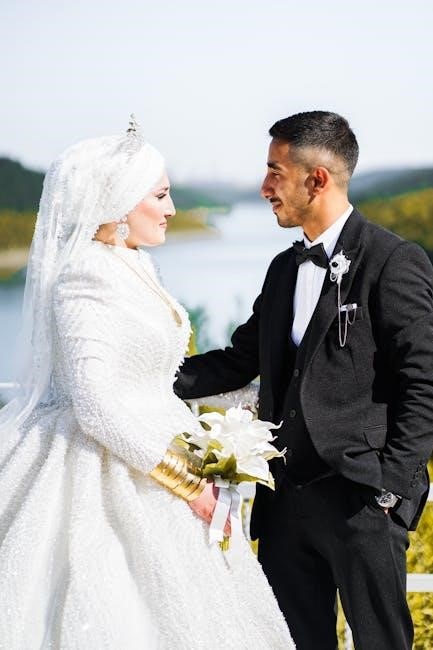
Traditional wedding vows offer a sense of timelessness and reverence, rooted in centuries of custom. Common phrases often include promises to love, honor, and cherish “for better, for worse, for richer, for poorer, in sickness and in health.”
These vows frequently emphasize lifelong commitment, faithfulness, and a dedication to building a shared future. They provide a comforting familiarity and a connection to generations past.
Many couples choose to incorporate these classic lines, either verbatim or with slight modifications, to honor tradition while still personalizing their ceremony. They represent a foundational expression of marital commitment.
Modern Wedding Vows: Personalizing Your Promises
Modern wedding vows embrace individuality and heartfelt expression, moving beyond traditional scripts. Couples are increasingly choosing to write their own vows, reflecting their unique relationship and shared values.
These personalized promises often include specific memories, inside jokes, and future aspirations. They focus on the qualities each partner admires in the other and the commitment to navigate life’s challenges together.
The goal is to create a deeply meaningful and authentic exchange, showcasing the couple’s distinct bond. Modern vows allow for a more intimate and relatable declaration of love and devotion, truly representing their journey.
Writing Your Own Vows: Tips and Inspiration
Crafting personal vows begins with reflection on your relationship’s core. Brainstorm cherished memories, qualities you admire, and promises for the future. Don’t strive for perfection; authenticity is key!
Consider the tone you desire – humorous, romantic, or a blend. Share stories that illustrate your connection and express your commitment in a genuine voice. Start by outlining key themes, then expand with details.
Seek inspiration from poetry, literature, or song lyrics, but avoid direct copying. Practice reading your vows aloud to ensure a comfortable flow and emotional impact. Remember, these words will be treasured forever!
Wedding Ceremony Timeline: A Step-by-Step Guide
A well-structured timeline ensures a smooth and memorable ceremony. It begins with the processional – the entrance of the wedding party, traditionally led by the groom and followed by the bride. This sets the tone for the event.
Next comes the officiant’s welcome and any readings or musical performances. The heart of the ceremony is the exchange of vows and rings, symbolizing your commitment. This is followed by the pronouncement of marriage and the kiss!
Finally, the recessional marks the newlyweds’ exit, often accompanied by joyful music. Detailed programs can help guests follow along, enhancing their experience.
Processional: The Entrance of the Wedding Party
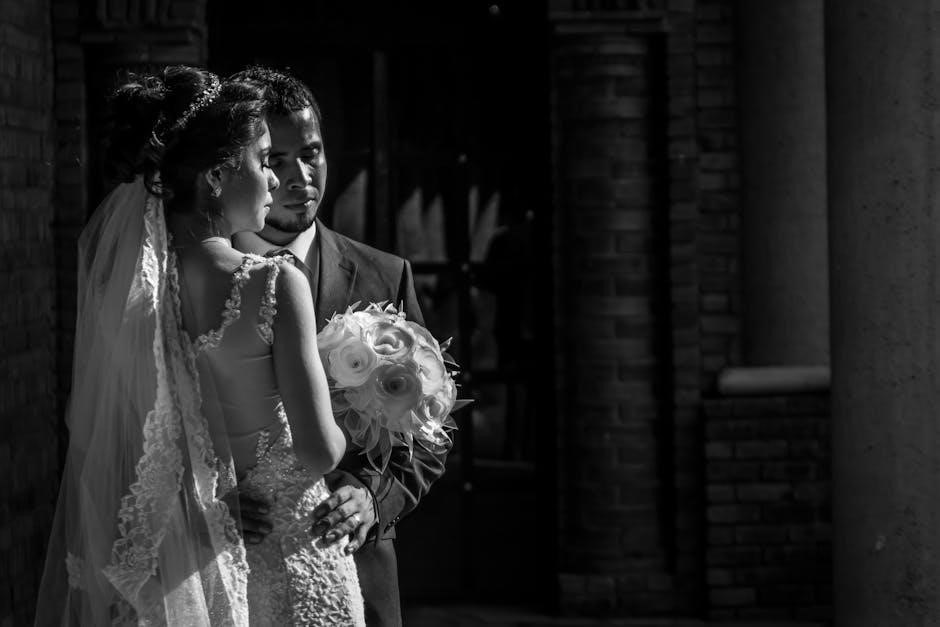
The processional establishes the atmosphere and formally begins the ceremony. Traditionally, the groom enters with the officiant, awaiting his bride. Then, the wedding party follows – groomsmen first, then bridesmaids, each pair walking gracefully down the aisle.
The maid of honor or matron of honor precedes the bride, often carrying the bouquet. Finally, the bride makes her grand entrance, typically escorted by her father or another significant figure. Music plays a crucial role, setting the emotional tone.
Consider the order and pacing to create a visually appealing and meaningful entrance for all involved.
The Exchange of Vows and Rings
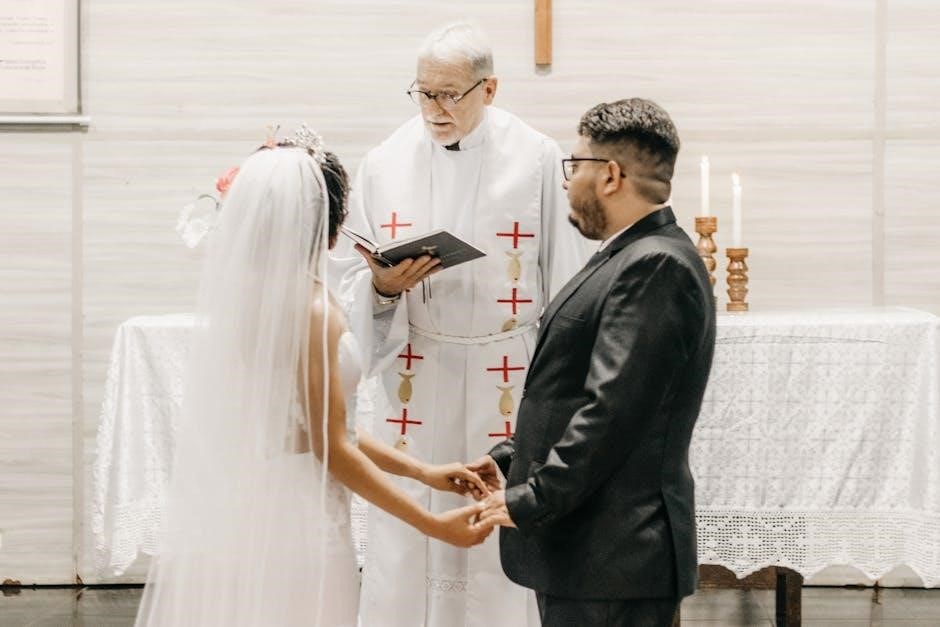
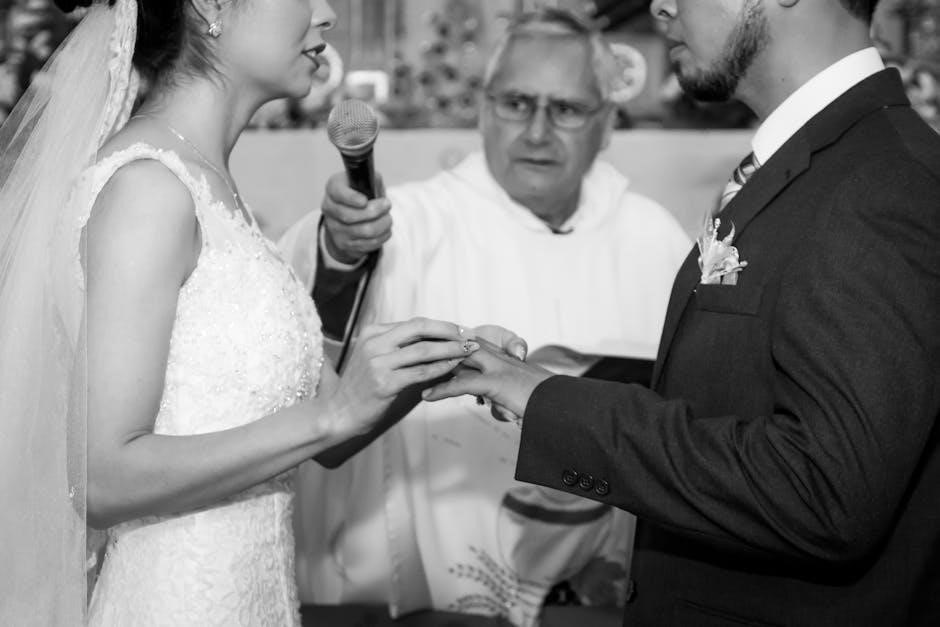
The heart of the ceremony lies in the exchange of vows and rings, symbolizing the couple’s commitment. Traditionally, the officiant prompts each partner to recite their vows, expressing their love and promises for the future.
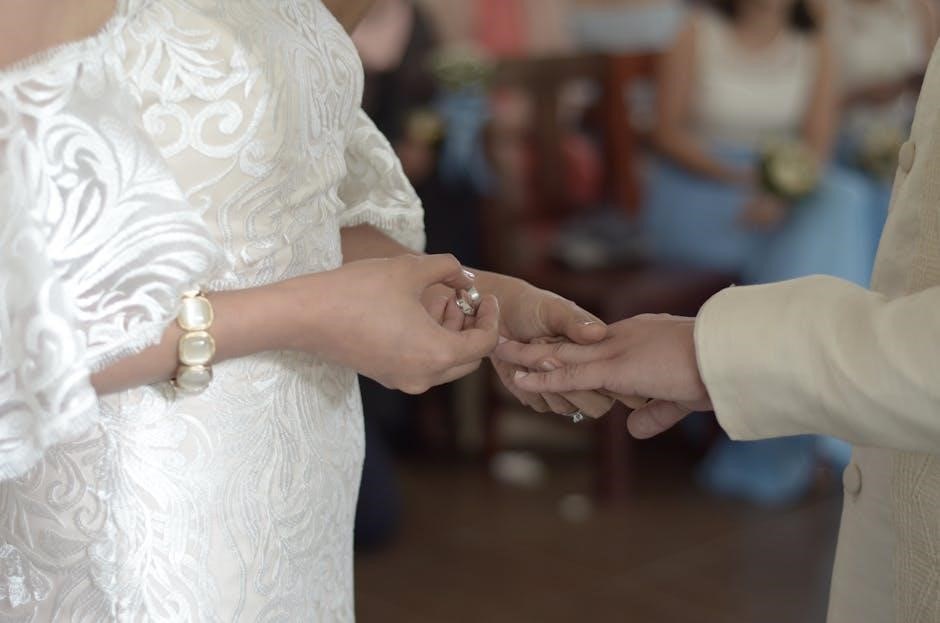
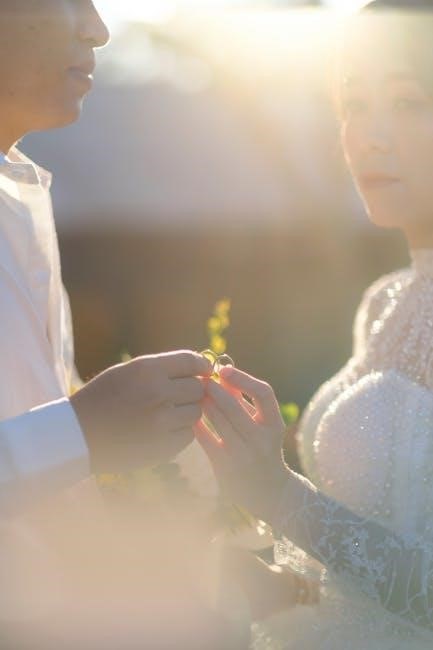
Modern couples often personalize their vows, sharing heartfelt sentiments and unique promises. Following the vows, the exchange of rings takes place. The groom typically presents the bride’s ring first, symbolizing his commitment, and then she presents his.
Rings are placed on the fourth finger of the left hand, believed to have a vein leading directly to the heart.
Recessional: The Newlyweds’ Exit
The recessional marks the joyous conclusion of the ceremony, as the newlyweds make their first official exit as a married couple. Traditionally, the couple walks back down the aisle, often with beaming smiles and celebratory gestures.
Music shifts to a more upbeat tempo, reflecting the celebratory mood. The wedding party follows behind the couple, typically in pairs, creating a visually pleasing procession. Guests offer applause and well wishes as the couple passes;
This moment signifies the transition from the ceremony to the reception, where the celebration continues with family and friends.
Wedding Reception Traditions
The wedding reception is a vibrant celebration following the ceremony, filled with cherished traditions designed to honor the couple and entertain guests. It’s a time for feasting, dancing, and heartfelt connections.
Key elements include the first dance, symbolizing the couple’s unity and love, and the wedding cake cutting, representing shared sweetness and prosperity. Toasts and speeches from loved ones add personal touches, sharing memories and well wishes.
These traditions, while evolving with modern preferences, continue to be central to the wedding experience, creating lasting memories for everyone involved.
First Dance: A Moment in the Spotlight
The first dance is a deeply symbolic moment, traditionally marking the couple’s debut as husband and wife. It’s a captivating spectacle, often the focal point of the reception’s early stages, drawing all eyes to the newlyweds.
Choosing a song that resonates with your relationship is crucial, reflecting your shared history and future aspirations. Whether a romantic ballad or an upbeat tune, the music sets the tone for the celebration.
This intimate dance offers a brief pause amidst the festivities, allowing the couple to savor a private moment together before mingling with guests and continuing the joyous occasion.
Wedding Cake Cutting: Symbolism and Sweetness
The wedding cake cutting is a cherished tradition steeped in symbolism, representing the couple’s first task performed together as a married unit. It signifies their commitment to providing for one another and sharing a sweet life.
Historically, the tiered cake symbolized prosperity and good fortune. Today, the design and flavors are often personalized to reflect the couple’s tastes and preferences, adding a unique touch to the celebration.
The act of cutting and feeding each other a piece of cake is playful and affectionate, often resulting in a lighthearted moment captured in photographs, creating lasting memories.
Toasts and Speeches: Celebrating the Couple
Toasts and speeches are a cornerstone of the wedding reception, offering heartfelt tributes and humorous anecdotes celebrating the newlyweds. Traditionally, the best man and maid of honor deliver the primary toasts, sharing stories about the couple’s journey.
Modern receptions often include speeches from parents, siblings, or close friends, allowing multiple voices to express their love and well wishes. These speeches are opportunities to reminisce, offer advice, and express gratitude.
A well-delivered toast can be incredibly moving, adding a personal and emotional touch to the celebration, creating a memorable experience for everyone involved.